

Best non-woven insulated bags for food & shopping
1. What are non-woven insulated bags?
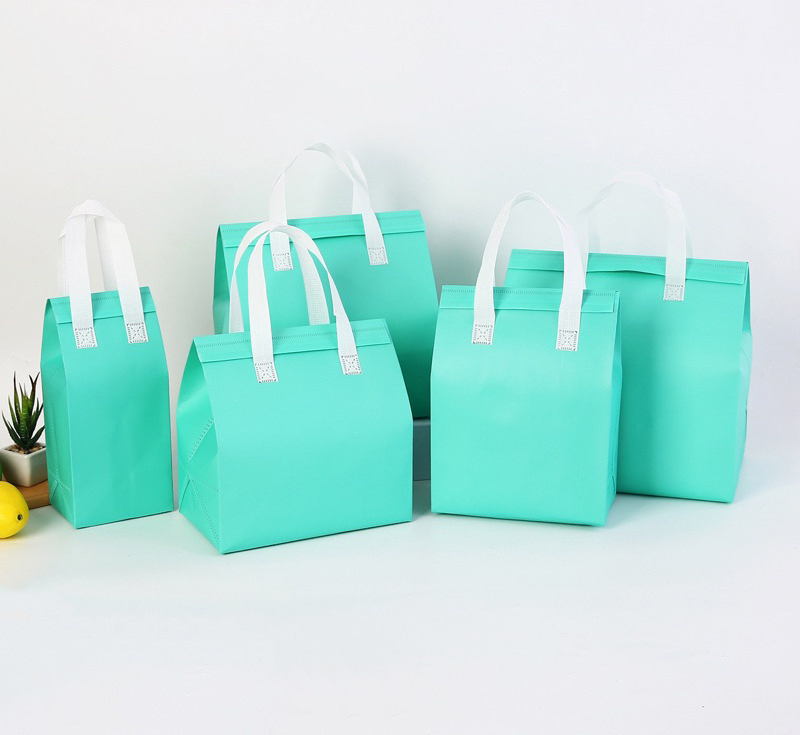
Non-woven insulated bags are bags that use non-woven fabric, commonly polypropylene (PP), as an outer or structural layer and incorporate additional materials to provide thermal insulation. Unlike ordinary non-woven shopping bags, insulated versions contain a layer designed to slow heat transfer between the contents and the surrounding environment.
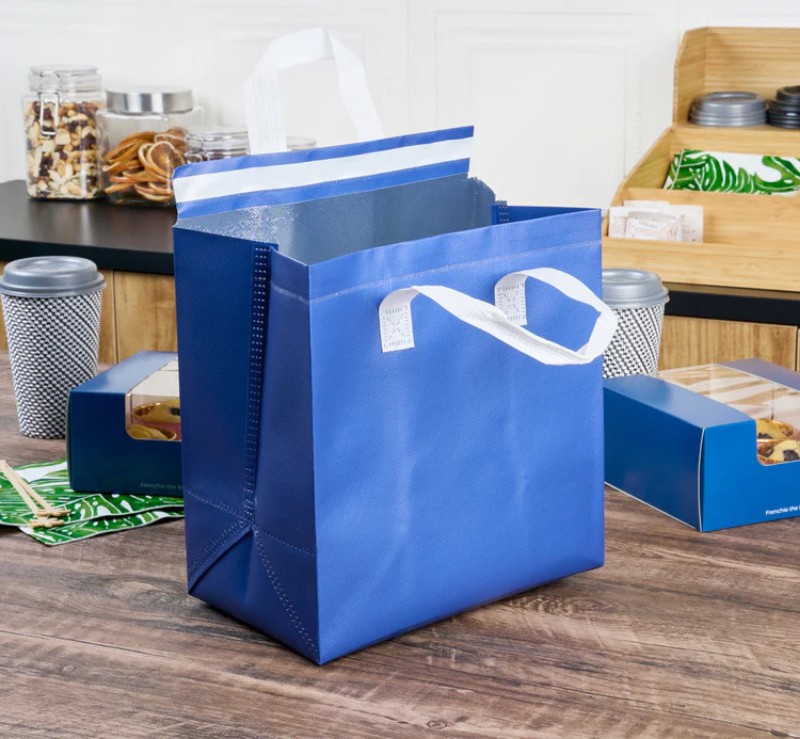
Their construction typically includes three components: an outer fabric, an insulating layer, and an inner lining. Depending on the intended application, manufacturers may use non-woven PP fabric, foam insulation, and moisture-resistant lining materials.
These bags do not actively refrigerate their contents. Instead, they help retain the temperature of items that have already been chilled or heated. Actual performance depends on insulation thickness, closure quality, ambient conditions, and the duration of transportation.
2. Key features of non-woven insulated bags
Thermal insulation
Thermal insulation is the defining feature of these bags. Materials such as polyethylene foam and expanded polyethylene foam can help reduce heat transfer, while suitable inner linings support the overall structure.
The effectiveness of non-woven insulated bags depends on the complete design rather than the outer fabric alone. Businesses should assess insulation specifications and temperature-retention performance according to the intended use.
Lightweight and portable construction
Non-woven PP fabric is lightweight and flexible, making it suitable for bags designed for everyday shopping and transportation. Handles, shoulder straps, foldable structures, and different carrying capacities can be incorporated to improve convenience.
A lightweight design can make the bag easier to carry and store when not in use, particularly for grocery shopping, lunch transportation, and promotional distribution.
Moisture resistance
Insulated bags may use PEVA, PE film, or other suitable lining materials to help resist moisture from condensation and minor spills. This feature is useful when carrying chilled beverages, fresh groceries, or food containers.
However, moisture resistance does not automatically mean that a bag is completely waterproof or leakproof. The lining, seams, zipper, and overall construction should be evaluated against the intended requirements.
Customizable design
Businesses can customize non-woven insulated bags according to their branding and packaging needs. Options may include bag dimensions, fabric colors, printed logos, handle styles, pockets, closures, and insulation specifications.
Customization allows supermarkets, food brands, retailers, and promotional campaign organizers to develop bags that combine practical functionality with a consistent brand identity.
3. Common materials used in non-woven insulated bags
Non-woven PP fabric
Non-woven polypropylene fabric is commonly used for reusable shopping bags and promotional packaging. It is lightweight, flexible, and available in different colors and fabric weights.
In insulated bag designs, non-woven PP fabric can serve as the outer layer, providing structure and a surface for branding. Its suitability depends on the required load capacity, construction method, and intended frequency of use.
PE and EPE Foam
Polyethylene (PE) foam and expanded polyethylene (EPE) foam are used in various insulation applications. Their cellular structure helps slow heat transfer and can provide additional cushioning.
The thickness and density of the foam influence the finished bag’s insulation performance, flexibility, and bulk. Manufacturers should select the appropriate specification based on the expected temperature-retention requirements.
Aluminum foil and reflective laminates
Some insulated bags incorporate aluminum foil or reflective laminated materials into the inner structure. These materials can help reduce radiant heat transfer when used as part of a properly designed insulation system.
A reflective surface alone does not guarantee effective temperature control. The overall construction, insulation layer, and closure system remain important.
PEVA and other inner linings
PEVA and other suitable lining materials can provide a smooth, moisture-resistant inner surface. The choice of lining should consider cleaning requirements, durability, and suitability for the intended application.
For food-related uses, businesses should verify relevant food-contact requirements for materials that may directly contact food.
4. Applications of non-woven insulated bags
Food shopping and grocery transportation
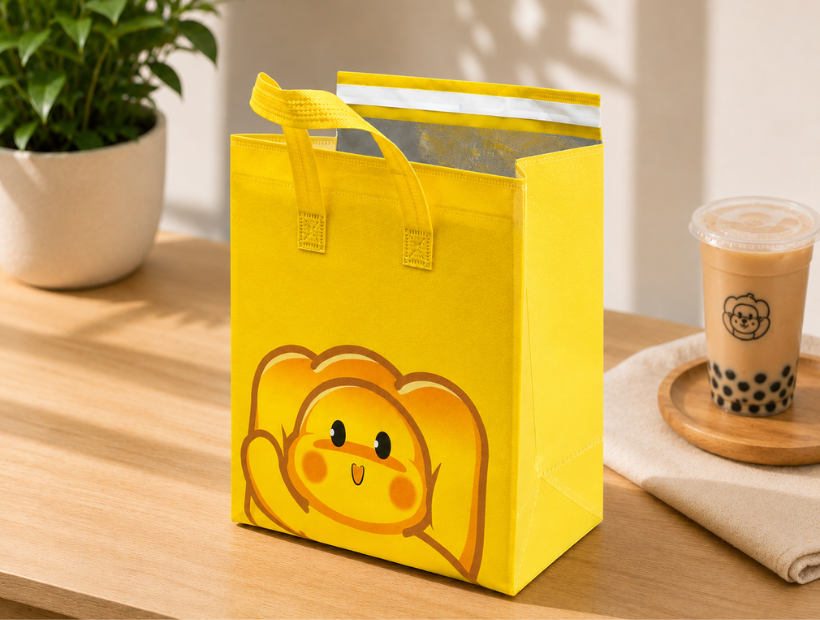
Supermarkets and grocery retailers can use insulated bags to help customers transport chilled products, dairy items, beverages, and other temperature-sensitive groceries. The bags are especially useful when customers need to carry multiple items between the store and their destination.
For perishable products, appropriate cold sources and food safety practices remain essential.
Food delivery and takeaway services
Restaurants, catering companies, and takeaway businesses may use insulated bags to help maintain food temperature during transportation. Different sizes can accommodate meal containers, beverages, and larger food orders.
Businesses should assess insulation performance, cleaning procedures, carrying capacity, and closure quality before selecting a bag for commercial delivery.
Retail and promotional campaigns
Retailers can use customized insulated bags as branded shopping accessories or promotional gifts. Printing logos and brand colors on the outer fabric can increase brand visibility when customers reuse the bags. For businesses seeking practical promotional merchandise, a reusable bag can provide ongoing exposure beyond the original purchase or campaign.
Picnics and outdoor activities
Insulated bags are suitable for picnics, camping, beach outings, and other outdoor activities. Depending on their size and construction, they can carry chilled drinks, snacks, lunch containers, and ice packs. Durable outer fabric, comfortable handles, and appropriate insulation can improve the user experience during transportation.
5. Why choose Stavian Green Packaging?
Material selection and manufacturing quality are important when developing packaging for retail, shopping, and promotional applications. Non-woven PP fabric offers a versatile option for businesses looking for lightweight, customizable bag materials.
Stavian Green Packaging provides PP packaging solutions, including non-woven PP fabric and non-woven bags, with customization options to support different business and branding requirements.
For businesses exploring insulated packaging, the outer fabric, insulation layer, inner lining, and bag construction should be evaluated together. The appropriate specifications depend on the required performance, target application, budget, and design preferences.
Whether you are developing packaging for grocery shopping, food transportation, or retail promotions, selecting suitable materials can help create a practical and consistent packaging solution.
Contact Stavian Green Packaging to discuss your packaging requirements and explore customized PP bag solutions tailored to your products, budget, and branding objectives.
View our green packaging products here: https://staviangreenpackaging.com/products/
Contact us:
Email: sgp@stavianpackaging.com
Hotline: +84 333 579 229
Facebook: https://www.facebook.com/sgp.staviangreenpackagingvn/

