

Laminated woven PP: strength, durability, and packaging applications
In manufacturing and transportation, packaging materials must withstand various stresses, including pulling, friction, stacking, and impacts during handling. For products with substantial weight or those requiring long-term storage, selecting suitable materials helps minimize damage and optimize packaging costs. This is one reason why laminated woven PP has gained attention in agricultural and industrial packaging applications.
In addition to its strong woven structure, this material can be customized in terms of fabric weight, dimensions, and coating to meet different application requirements. But what factors determine its actual durability, and which applications can benefit most from this material?
1. What determines the durability of laminated woven PP?

Laminated woven PP is manufactured from polypropylene (PP) tapes interwoven in the warp and weft directions, followed by the application of a film layer to the fabric surface. The woven structure provides mechanical strength, while the coating creates a more closed surface, helping limit dust penetration and improve moisture resistance compared with uncoated woven fabric.
The durability of this material depends not only on the polypropylene itself but also on how the PP tapes are produced and woven together. Several important factors include:
- Fabric weight: Measured in grams per square meter (g/m²), fabric weight helps determine whether the material meets the required strength specifications without using unnecessary raw materials.
- Weave density: The density of the woven structure affects surface consistency and the distribution of forces across the fabric.
- Quality of PP tapes: The mechanical properties of the polypropylene tapes influence tensile strength and material stability.
- Lamination quality: The coating must adhere properly to the woven substrate to reduce the risk of delamination during processing and use.
According to the report Laminated Woven Sacks from China published by the United States International Trade Commission (USITC), laminated woven sacks are used for packaging goods and are associated with properties such as tensile strength and tear resistance. Compared with certain types of multiwall paper sacks, laminated woven sacks may offer durability advantages during transportation and storage, depending on the product’s structure and design.
For laminated woven PP, performance also depends on weave density, fabric weight, and coating quality. These factors influence load-bearing performance, material durability, and the level of protection provided to packaged goods. Therefore, businesses should consider both material specifications and actual packaging requirements rather than choosing a product based solely on thickness or price.
2. How much load can laminated woven PP withstand?

Load-bearing capacity is an important criterion when selecting packaging materials. However, it is essential to distinguish between the tensile strength of a piece of fabric and the safe working load of a finished bag. These are two different specifications.
For laminated woven PP, tensile strength depends on fabric weight, weave density, tape properties, and the direction in which force is applied. Once the material is converted into packaging, its load-bearing performance is also affected by seam strength, bottom construction, bag-mouth design, and overall manufacturing quality.
For example, bags used for grain or fertilizer must withstand stress when filled, lifted, transported, and stacked. If the seams are insufficiently strong or the bag design is unsuitable for the product’s weight, the finished bag may tear even when the base fabric has good mechanical properties.
Businesses should therefore avoid using fabric weight alone to evaluate load-bearing capacity. For applications with specific load requirements, it is important to review technical specifications and test the finished bags under actual operating conditions.
3. When does the coating make a difference?
Compared with conventional woven PP fabric, laminated woven PP features an additional film layer on its surface. This layer does not replace the woven structure’s primary load-bearing function, but it provides additional properties that can improve packaging performance.
First, the coating helps limit dust penetration and reduces direct exposure of the fabric surface to environmental moisture. This can be useful for packaging powders, granules, and raw materials that require protection during transportation. However, actual moisture resistance depends on the film type, lamination quality, and how effectively the finished bag is sealed.
In addition, the coated surface can support the printing of product information, logos, and brand identity elements. For bags made with BOPP film, images and colors can be reproduced clearly, making them suitable for products that require both protective performance and attractive presentation.
4. From agricultural sacks to industrial packaging materials
By combining the strength of a woven structure with the additional properties of a coating, laminated woven PP can be used in a wide range of packaging applications.
In agriculture, this material is used to manufacture bags for fertilizer, animal feed, seeds, and various agricultural products. Its mechanical strength supports packaging and handling requirements, while the coating helps reduce exposure to external dust and moisture.
In industrial applications, the material can be used for bags containing granular materials, powders, and other products that require durable packaging. Depending on the design, woven PP fabric can also be converted into rolls, packaging bags, or protective covers for manufacturing and transportation purposes.
For shipments involving heavy loads, businesses should evaluate fabric strength, seam performance, and bag design together. If the packaged products require a high level of moisture protection, an additional liner or a suitable sealing method may be necessary rather than relying solely on the laminated surface.
5. Laminated woven PP and packaging cost optimization
When selecting packaging materials, businesses often focus on the cost per bag. However, the initial purchase price is not the only factor that determines the overall cost.
Materials with strength specifications suited to the product’s weight can help reduce bag tearing, product loss, and repackaging expenses. Conversely, materials with insufficient fabric weight may increase the risk of damage, while unnecessarily heavy materials can raise raw material costs without providing meaningful benefits.
Businesses should therefore identify the product’s characteristics, packaging weight, transportation conditions, and storage requirements before selecting the appropriate specifications. Testing samples under actual operating conditions can also help determine whether the material is suitable before moving to large-scale production.
6. Stavian Green Packaging – Laminated woven PP solutions for businesses
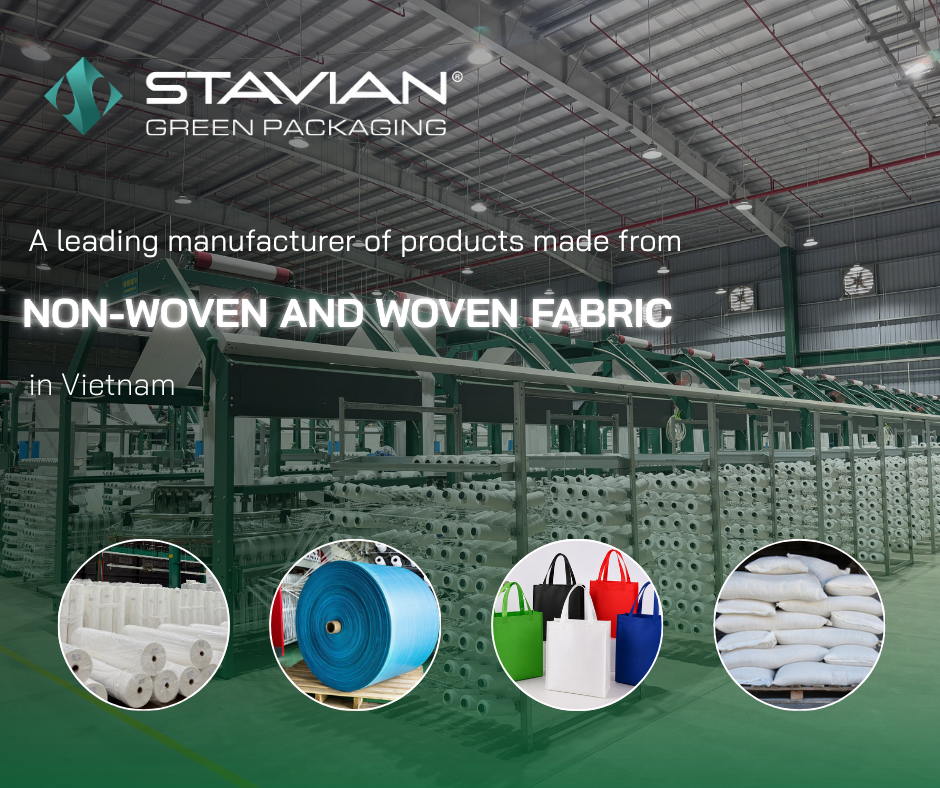
To support brand presentation and reliable packaging performance, businesses need to select a manufacturing partner with suitable technical capabilities and production expertise.
Stavian Green Packaging, a member of the Stavian Group, provides high-quality packaging solutions for domestic and export markets. With modern production capabilities at its Phu Tho factory, including hot-melt bonding and mechanical stitching processes, the company aims to deliver packaging solutions designed to meet applicable requirements and the needs of export markets.
Stavian Green Packaging states that its production operations follow quality management standards and hold certifications and compliance credentials including ISO 9001:2015, ISO 14000, BRC, BSCI, REACH, and RoHS. These credentials may support customers’ quality and compliance assessments; specific requirements should be verified against the relevant product, facility, and certification scope.
Businesses can also contact Stavian Green Packaging through the following channels:
Website: https://staviangreenpackaging.com/
Email: sgp@stavianpackaging.com
Hotline: +84 333 579 229
Facebook: https://www.facebook.com/sgp.staviangreenpackagingvn/

