

Heat-seal bags or sewing bags? Compare characteristics of these two packaging types
Are you considering whether to invest in heat-seal bags or use durable, reinforced sewing bags to optimize your company’s packaging costs? In modern supply chain management, choosing the right packaging structure is not simply about containing products. It is a strategic decision that helps protect product quality, optimize logistics and handling costs, and enhance brand value.
The following article provides an in-depth analysis of the technical characteristics, mechanical strength, and practical applications of heat-seal bags versus sewing bags, helping your business make a more informed purchasing decision.
1. Overview of Heat-Sealed Bags and Sewn Bag Solutions for Packaging
To gain a comprehensive understanding, let’s first look at the bonding mechanisms used in each type of packaging.
- Heat-seal bags: These bags use high temperatures combined with mechanical pressure to melt the surface layer of plastic materials such as PE, PP, or laminated composite films. During rapid cooling, the molten polymer chains intermingle and fuse together, creating a completely sealed seam.
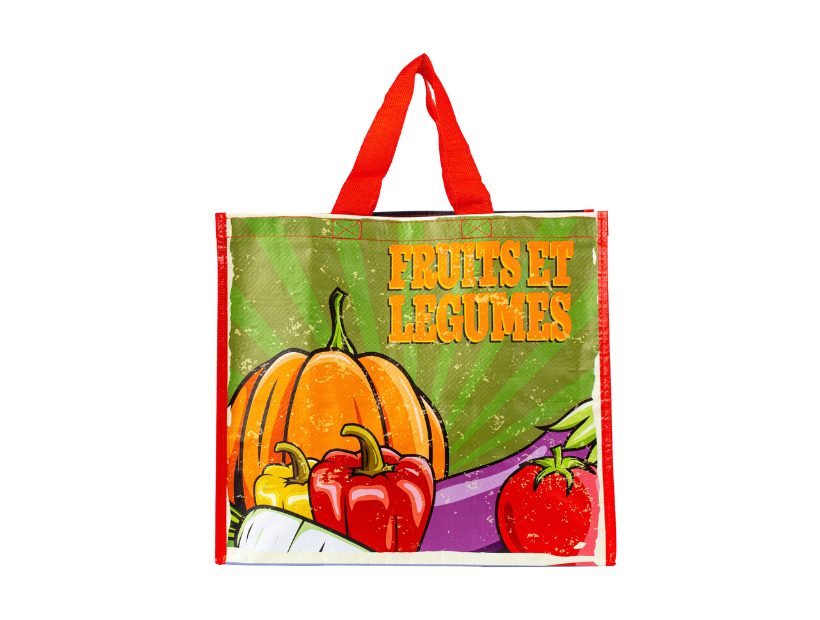
- Sewing bags: These bags use industrial sewing systems and reinforced sewing threads, such as woven PP fibers and high-strength polyester, to mechanically join the edges or bottoms of the bag. Sewn bags are typically manufactured from load-bearing materials such as non-woven fabric, woven PP, or laminated composite materials combined with fabric.
The fundamental difference between thermal fusion bonding and mechanical thread stitching is a key factor determining the physical strength and performance characteristics of these two packaging solutions.
Detailed Comparison of Plastic Materials: PP, PE, and Non-Woven PP
- PE plastic: Soft, flexible, highly impact-resistant, and highly water-resistant. PE is commonly used as a single-layer film or liner for heat-sealed bags, zipper bags, and moisture-resistant inner liners.
- PP plastic: More rigid than PE, with excellent tensile strength and high scratch resistance, although it can become more brittle at low temperatures. Virgin PP is commonly blown into transparent films or woven into heavy-duty PP bags designed to withstand high loads.
- Non-woven PP: PP resin is spun into fine filaments and directly thermally bonded, without the conventional yarn-weaving process, to form a lightweight, porous plastic fabric. This material is durable, easy to fold and sew, washable, and reusable multiple times. It is widely used for sewn shopping bags and B2B promotional or gift bags.
2. Mechanical Strength Comparison: Heat-Seal Bags vs. Sewing Bags
From a packaging engineering perspective, durability is evaluated based on a bag’s ability to withstand static loads, transverse tearing forces, impact from free falls, and air tightness.
| Technical Criteria | Heat-Seal Bags | Sewing Bags |
|---|---|---|
| Air Tightness & Moisture Resistance | Excellent: Effectively prevents the penetration of air, moisture, and microorganisms. | Low to Medium: Stitching creates microscopic gaps that may allow air and moisture to penetrate if no inner liner is used. |
| Load-Bearing Capacity | Medium: Sealed seams may split under excessive static loads (>25 kg). | Extremely High: Load-bearing fibers distribute weight evenly throughout the sewn bag, supporting loads ranging from 10 kg to 100 kg. |
| Tear Resistance & Impact Strength | More susceptible to seam splitting when dropped from height or compressed under stacked loads. | Highly durable stitching provides strong resistance to impact, friction, and handling stress in warehouse environments. |
If your business packages delicate products, components, or food products requiring a highly controlled or hygienic environment, heat-sealed bags can provide an effective solution. Conversely, for granular materials, powders, agricultural products, heavy-duty packaged goods, or industrial products subject to frequent handling, durable sewn bags can offer greater mechanical safety and reduce the risk of seam failure or bag rupture.
3. Sustainable Packaging Trends and the Growing Role of Sewn Bags
Stricter environmental regulations in international markets are driving the packaging industry to restructure its approach to materials and product design. According to the updated Circular Economy for Plastics report by Plastics Europe, transitioning toward packaging solutions that can be reused multiple times and increasing the proportion of recycled materials are important steps toward reducing the carbon footprint of supply chains.
Against this backdrop, sewing bags made from non-woven PP or recycled woven PP offer significant potential. Compared with single-use heat-sealed bags, sewn bags can have a considerably longer service life due to their high mechanical strength. Their reusability can support circular packaging models while helping businesses address increasingly stringent ESG and sustainability requirements in demanding export markets.
4. Stavian Green Packaging – A Reliable Partner for Comprehensive Packaging Solutions
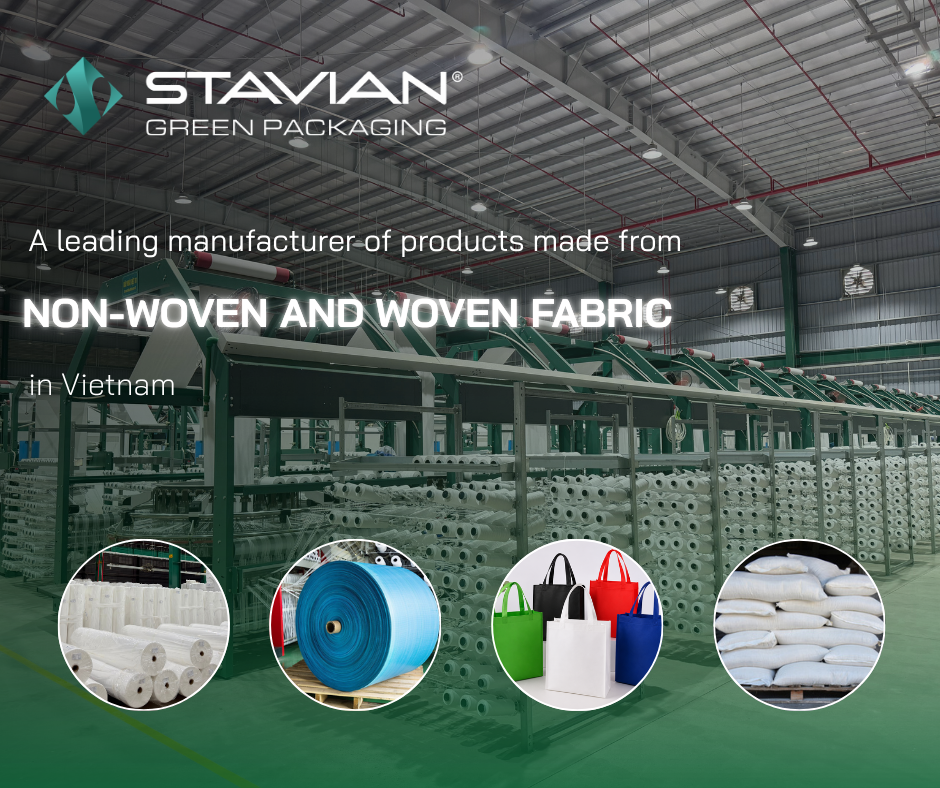
To ensure effective brand communication and safe load-bearing performance across your packaging system, choosing a manufacturing partner with strong technological capabilities is a critical business decision.
Stavian Green Packaging, a member of the Stavian Group, is a leading Vietnamese provider of high-quality laminated woven PP bag solutions for both domestic and international markets. With advanced thermal bonding and mechanical sewing production lines at its Phu Tho manufacturing facility, we are committed to delivering sustainable packaging solutions that comply with the stringent requirements and regulations of international export markets.
The entire production process at Stavian Green Packaging follows rigorous quality management standards and is supported by internationally recognized certifications, including ISO 9001:2015, ISO 14001, BRC, BSCI, REACH, and RoHS, helping us meet the export requirements of global partners across the United States, Europe, and Japan.
Explore Our Products
https://staviangreenpackaging.com/vi/san-pham/
Get in Touch
Website: https://staviangreenpackaging.com/
Email: sgp@stavianpackaging.com
Hotline: +84 333 579 229
Facebook: https://www.facebook.com/sgp.staviangreenpackagingvn/
Reference
https://plasticseurope.org/knowledge-hub/circular-economy-for-plastics-2026/?utm_source=gemini

